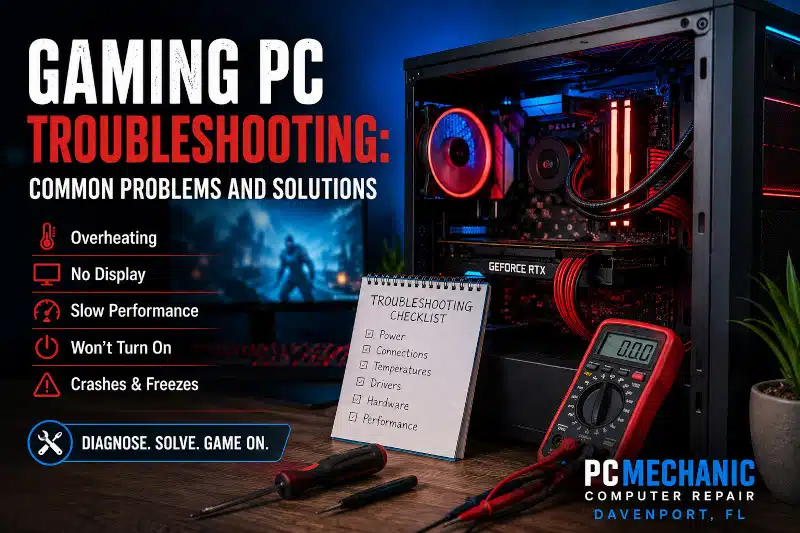
Gaming PC troubleshooting can help identify why your computer is crashing, overheating, running slowly, displaying a black screen, or shutting down unexpectedly. However, the same symptom can have several possible causes. That’s why replacing components based on assumptions can quickly become expensive.
A gaming PC places heavy demands on the processor, graphics card, memory, storage, power supply, and cooling system. Windows, drivers, and software can also affect stability and performance. Therefore, finding the source of the problem is more important than simply replacing the component that appears to be responsible.
At PCMechanic Computer Repair in Davenport, FL, I diagnose gaming PCs when the cause isn’t obvious. Understanding the symptoms can help narrow down the possibilities and determine when a professional diagnosis is warranted.
Where to Start When Your Gaming PC Has Problems
Before assuming that a component has failed, consider exactly when and how the problem occurs.
Effective gaming PC troubleshooting starts by identifying when the problem occurs and which components are under load at the time.
Does the computer fail to turn on at all? Perhaps it works normally until you launch a game. In other cases, the system may crash after gaming for several minutes. It may also run but produce poor frame rates or excessive temperatures.
These differences matter.
For example, a computer that shuts down during a demanding game could have a power problem. However, excessive temperatures or unstable hardware can produce similar symptoms. Likewise, a black screen could be due to the graphics card, but it can also result from RAM, power, motherboard, or startup issues.
Good troubleshooting starts with the symptoms and works toward the cause.
When Your Computer Won’t Turn On
A gaming PC that won’t power on can have several possible causes.
The power supply may have failed. However, motherboard problems, loose power connections, damaged components, or other hardware failures can also prevent startup.
Sometimes the system appears completely dead. In other cases, the fans or lights briefly activate before everything shuts down again.
Because several components are involved in the startup process, replacing the power supply based solely on a no-power symptom isn’t always the right approach.
If testing confirms that the PSU has failed, my Power Supply Replacement Service covers replacement of faulty or inadequate desktop power supplies.
If the cause remains unclear, my Gaming PC Repair in Davenport, FL service includes diagnosis of startup and hardware problems.
Crashes and Freezes During Gaming
Crashes and freezes are among the more difficult gaming PC problems to diagnose because both hardware and software can cause them.
Possible causes include:
- Unstable or failing RAM
- Excessive CPU or GPU temperatures
- Power supply problems
- Storage drive issues
- Windows corruption
- Driver conflicts
- Failing hardware
- Compatibility problems
When the computer crashes only during gaming, the additional workload can provide an important clue. Gaming places substantially more demand on the CPU, GPU, power supply, and cooling system than basic desktop use.
A system that seems perfectly stable while browsing the internet may therefore become unstable during a demanding game.
Instead of replacing components randomly, identifying when the crashes occur can help narrow down the source.
Overheating and High Temperatures
Gaming computers generate significant heat. However, excessive temperatures can lead to reduced performance, instability, or unexpected shutdowns.
Possible causes include dust buildup, inadequate airflow, failed fans, aging thermal compound, an undersized CPU cooler, or a restrictive computer case.
Modern CPUs and GPUs can also reduce their operating speeds when temperatures become excessive. This process, known as thermal throttling, protects the hardware but can contribute to poor gaming performance.
If you’re experiencing unusually high processor temperatures, my article CPU Overheating While Gaming explains the common warning signs and causes.
When the existing cooling system isn’t adequate, a CPU Cooler Upgrade Service may provide a better solution.
The computer case can also make a significant difference. If the existing enclosure restricts ventilation or doesn’t provide enough room for cooling hardware, read about the Benefits of Upgrading Your PC Case to learn when a case swap may improve airflow and component clearance.
Black Screen or No Display
A black screen can immediately make the graphics card seem like the obvious culprit. However, the GPU is only one possibility.
Memory problems, power issues, motherboard failures, loose connections, startup problems, or an improperly installed component can also prevent a gaming PC from displaying an image.
The circumstances surrounding the failure are useful.
For example, a computer that suddenly loses video while gaming presents a different diagnostic situation from a newly assembled computer that has never displayed an image.
Before purchasing an expensive replacement graphics card, it makes sense to determine whether the GPU is actually responsible.
Slow Performance and Stuttering
Poor gaming performance doesn’t necessarily mean something has failed.
Sometimes the existing hardware simply isn’t powerful enough for the game or settings being used. In other cases, excessive temperatures, insufficient RAM, software problems, storage limitations, or background applications may contribute to poor performance.
CPU and GPU balance also matters. Installing a powerful graphics card into a system with an older processor can create a CPU bottleneck. Likewise, upgrading the CPU won’t necessarily improve performance when the graphics card is already the primary limitation.
If the computer is functioning correctly but no longer delivers the performance you want, my Affordable Gaming PC Upgrades in Davenport, FL guide explains which upgrades may provide the most meaningful improvement.
Random Shutdowns and Restarts
Unexpected shutdowns and restarts deserve attention, especially when they occur repeatedly during gaming.
A power supply problem is one possible cause. Gaming places a significant electrical load on the graphics card and processor, so a PSU problem may only become apparent under load.
However, overheating and unstable hardware can create similar symptoms.
That’s why a shutdown during gaming shouldn’t automatically lead to a power supply replacement.
The system’s temperatures, hardware configuration, power requirements, and other symptoms should be considered before determining the cause.
If the PSU is failing or cannot adequately support the installed hardware, replacement may be necessary.
Windows and Driver Problems
Hardware isn’t responsible for every gaming PC problem.
Windows corruption, damaged system files, problematic drivers, software conflicts, malware, or unsuccessful updates can contribute to crashes, startup failures, and poor performance.
Graphics drivers are particularly important for gaming systems. However, repeatedly reinstalling drivers won’t fix faulty hardware, overheating, or a failing power supply.
The goal is to determine whether the problem originates in Windows or elsewhere on the computer.
When Windows becomes too unstable or corrupted to repair reliably, my Windows Installation & Reinstallation Service offers a clean installation and configuration option.
When Troubleshooting Points to a Hardware Upgrade
Sometimes troubleshooting reveals that nothing is actually broken.
The computer may simply have reached the performance limits of its existing hardware.
For example, an older graphics card may struggle with newer games. A CPU can become a bottleneck after a major GPU upgrade. A system may need additional RAM, while an older storage drive can contribute to slow loading and poor overall responsiveness.
In these situations, upgrading the appropriate component can extend the computer’s useful life.
However, compatibility still matters. The motherboard, power supply, cooling system, case, and existing components can determine which upgrades are practical.
Choosing the right upgrade depends on which component is actually limiting the system and whether the existing hardware provides a worthwhile upgrade path.
If several major components have become outdated, investing heavily in the existing computer may not make sense. In that situation, my Gaming PC Build Services in Davenport, FL, may provide a better long-term option.
Still having trouble identifying what’s wrong with your gaming PC? Contact PCMechanic Computer Repair in Davenport, FL, and I’ll diagnose the problem and recommend the appropriate repair.

When to Have Your Gaming PC Professionally Diagnosed
Gaming PC troubleshooting can narrow down many common problems, but some symptoms require diagnostic testing to identify the actual cause. However, replacing parts without knowing the cause can quickly become expensive.
Professional diagnosis makes sense when:
- The computer won’t turn on
- Crashes or freezes continue
- The system shuts down during gaming
- Temperatures remain unusually high
- A black screen or no-display condition persists
- Windows and driver fixes don’t solve the problem
- You suspect a hardware component has failed
- A problem started after installing new hardware
- You’re unsure whether the computer needs repair or an upgrade
I evaluate the symptoms and the components most likely to be responsible rather than assuming a particular part has failed.
If you’ve tried basic checks and still can’t determine what’s causing the problem, my Gaming PC Repair in Davenport, FL service covers hardware, Windows, cooling, power, compatibility, and performance problems.
Frequently Asked Questions About Gaming PC Troubleshooting
Why does my gaming PC crash only when playing games?
Games place much greater demand on the CPU, GPU, power supply, memory, and cooling system. Therefore, overheating, unstable hardware, power problems, or driver issues may appear during gaming even when normal desktop use seems stable.
Why does my gaming PC turn on but show a black screen?
Several problems can cause a no-display condition. The graphics card is one possibility, but RAM, motherboard, power, connections, and startup problems can produce similar symptoms.
Can overheating cause a gaming PC to crash?
Yes. Excessive temperatures can cause instability, thermal throttling, shutdowns, or reduced performance. The cooling system and airflow should be evaluated when temperatures remain unusually high.
How do I know if my gaming PC power supply is failing?
Random shutdowns, startup problems, or instability under heavy load can sometimes indicate a PSU problem. However, other hardware issues can produce similar symptoms, so diagnosis is important to diagnose the problem before replacing the power supply.
Why is my gaming PC suddenly running slower?
High temperatures, background software, driver problems, insufficient memory, storage problems, or hardware limitations can all affect performance. The cause depends on when the slowdown occurs and how the system behaves.
Should I repair or upgrade my gaming PC?
If a component has failed, repairing the system may be the appropriate solution. If everything works correctly but the hardware no longer provides the performance you need, an upgrade may make more sense.
Can you diagnose my gaming PC if I don’t know what’s wrong?
Yes. You don’t need to identify the failed component before bringing the computer in. I can evaluate the symptoms and diagnose the system to determine the likely cause.
Need Help Troubleshooting Your Gaming PC?
Gaming PC troubleshooting can narrow down many problems, but similar symptoms don’t always have the same cause. A black screen doesn’t automatically mean a failed graphics card, and a random shutdown doesn’t necessarily mean the power supply needs replacement.
If your gaming PC continues to crash, overheat, freeze, shut down, lose performance, or refuse to start, contact PCMechanic Computer Repair in Davenport, FL. I can diagnose the problem and help determine whether your computer needs a repair, hardware upgrade, or another solution.